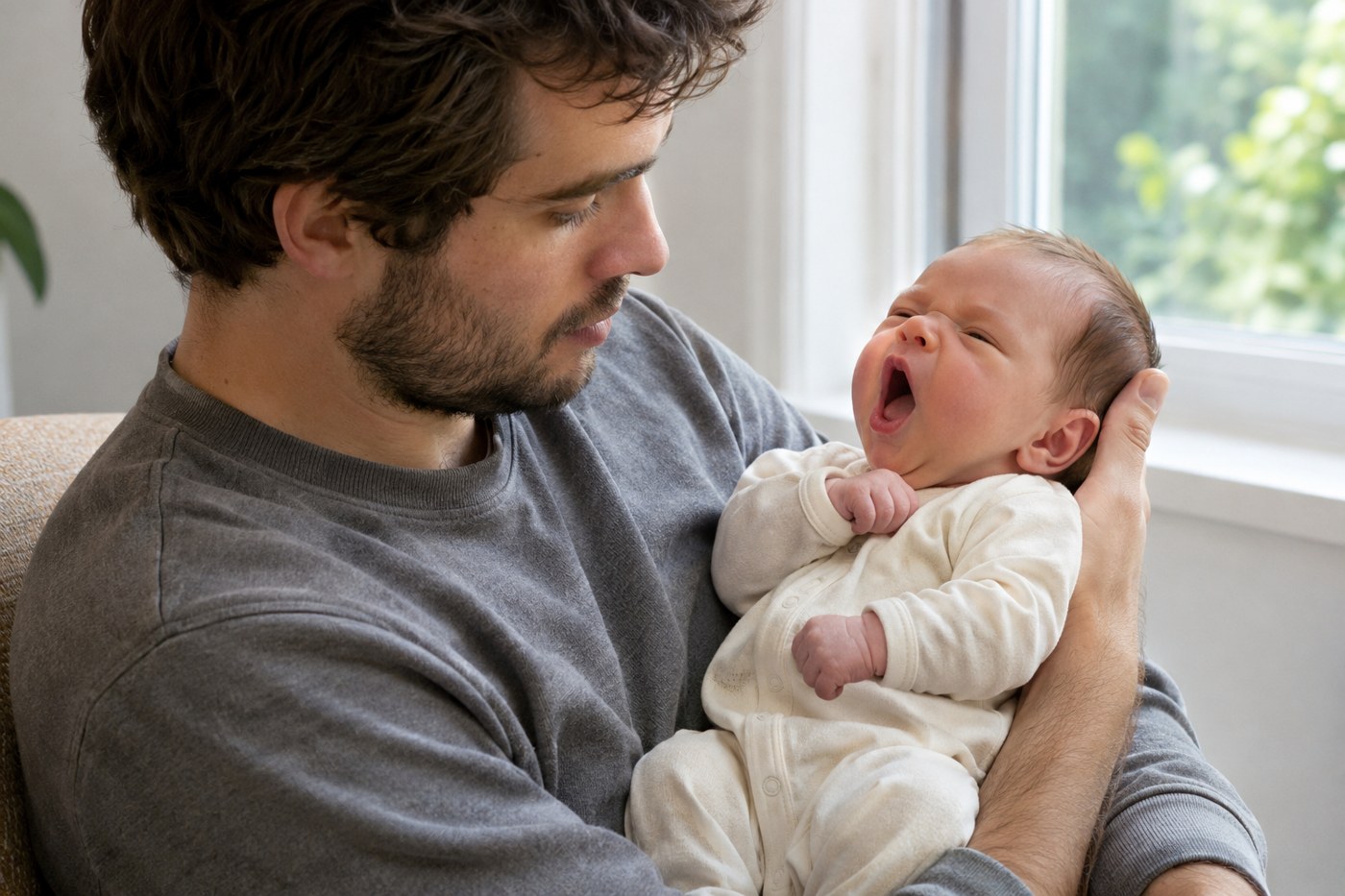

Hearing your baby whimper with their eyes closed can make you think your baby is suffering. Sometimes there are movements, small sounds, or a very brief cry during sleep. Other times he is starting to wake up and needs to eat, comfort, or have a discomfort checked out.
You cannot identify the stage of sleep or rule out pain just because your baby's eyes are closed. Look at the baby, not just the baby monitor screen, and see how he or she breathes, how long the episode lasts, and what happens next.
If it is a short sound
If the baby breathes normally, maintains its usual color, and becomes calm again, you can observe for a moment without turning on lights or automatically picking it up. There is no need to set a timer or wait a mandatory time.
Brief observation is not the same as leaving a baby to cry. If the crying increases, you see signs of hunger, or something is worrying you, address it. In newborns, frequent feeds are expected and feeding and growth instructions must be respected.
If the crying continues
Walk in and check the basics: breathing, surrounding temperature, clothing, diaper when applicable, and signs of hunger. Try a calm response: soft voice, a hand or arms if needed. You can offer a feed if it fits with their cues or feeding plan.
If it calms down when you pick it up, this does not show a specific cause. Not all night crying is reflux, colic or teething. Avoid starting medications, changing milk, or adding thickeners just to try to get him to sleep more.
What should be noted
A brief log may help if episodes recur:
- When did they start and if they occur at a similar time.
- Whether it is seconds of moaning or several minutes of intense crying.
- If the baby finishes waking up and how he is comforted.
- If they coincide with feeds, vomiting, congestion or fever.
- How he eats, wets diapers, and behaves during the day.
A short video can be useful for a consultation if you can record it without delaying care. You don't need to film all night or buy a device to gather enough information.
Don't assume they're nightmares
In a small baby it is not reliable to interpret crying as a nightmare. Night terrors are described mainly in older children; They are not an automatic explanation for an infant. Labels can reassure, but also distract from hunger or illness.
Maintain a safe sleep environment: place your baby on their back on a firm, flat mattress in a crib without soft objects. Products that elevate the baby are not a safe solution for crying attributed to reflux.
When to seek help promptly
Seek urgent attention for respiratory distress, bluish discoloration, abnormal movements with lack of response, or marked difficulty in waking the child. In children under three months of age, a temperature of 38°C or higher requires rapid medical evaluation.
Also consult if there is new and inconsolable crying, insufficient feeding or a worrying reduction in wet diapers. If everything seems normal but the episodes repeat themselves and worry you, a check-up provides more than trying to diagnose sleep from a video.
General information, not medical advice. If you are worried about your baby's sleep, feeding or health, talk to your doctor, midwife or health visitor.