By one year old, a baby may still be taking two naps or approaching one. There is no birthday date that requires changing the schedule. Many children go from two to one between twelve and eighteen months, with individual variation.
The useful decision depends on how your baby sleeps, how they seem in the afternoon and what happens at bedtime. A day of refusing a nap, especially with illness or changes in environment, does not confirm that your baby no longer needs it.
Signs that two naps are still helping
If your baby settles relatively easily for both naps, wakes reasonably rested and reaches bedtime comfortably, there is no automatic reason to remove a nap.
Your baby may still need two naps if a single nap falls too early and leaves a very long afternoon. A worse night after dropping a nap may mean the transition was too early for their needs.
Signs that invite you to review
An adjustment may help if your baby repeatedly refuses one nap, the second nap ends increasingly late or bedtime is substantially delayed, while they otherwise seem well during the day.
Before deleting a break, check if moving it or shortening it a little is enough. It is not necessary to maintain a long nap in the morning if it always prevents sleep in the afternoon, but it is not advisable to reduce all daytime sleep without observing the result.
How to transition flexibly
If he is set for a single nap, you can gradually move the main rest towards the center of the day. Adjust food and activities so your baby does not have to choose between hunger and tiredness.
Some days your baby may need an earlier bedtime. Others, after a short night, may require two naps again. This back and forth is compatible with a normal transition; It doesn't mean you have to start from scratch.
If they go to daycare, ask what they observe and share how they are in the afternoon at home. Sometimes a schedule works in one environment but needs adaptations on the days you stay with the family.
See the total without chasing a figure
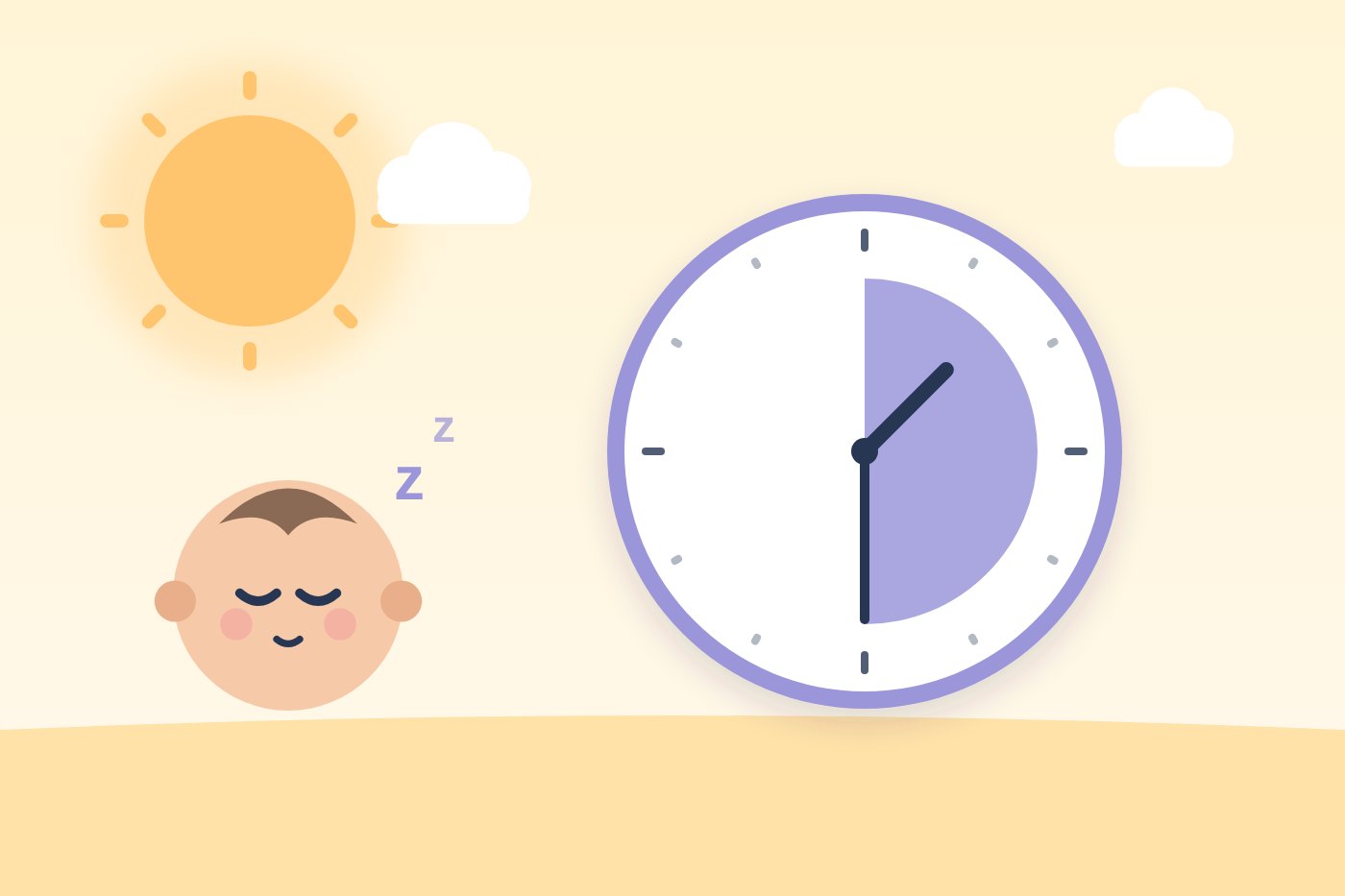
The American Academy of Sleep Medicine's recommendation for children ages one to two is eleven to fourteen hours in a twenty-four hour period, including naps. It is a general guideline: it also matters whether your child is active, eats well and seems rested.
There is no need to force a nap of exactly the same length or interpret an isolated night as a complete evaluation of the schedule. Observe trends over several days.
When to consult
Discuss habitual snoring, breathing pauses, noticeable drowsiness, or growth problems with your health professional. If the schedule becomes a constant fight or family exhaustion is intense, you deserve support too.
The goal is not to reach a one-nap schedule as soon as possible. It is to distribute the rest so that the child and the adults have a day that can be carried out.
General information, not medical advice. If you are worried about your baby's sleep, feeding or health, talk to your doctor, midwife or health visitor.