White noise can mask unpredictable sounds, such as an elevator or a door closing. For some families it provides a more stable environment; others do not see a sufficient difference to maintain it.
Its usefulness does not depend on whether it sounds loud. Before purchasing a device, it is worth distinguishing three questions: whether it helps in your room, what exposure the baby receives and where it can be placed safely.
What the sound machine study investigated
Hugh and collaborators measured fourteen children's machines under laboratory conditions and at various distances. They found potentially worrying maximum levels under certain conditions.
They have not studied hearing loss in babies or proven that all models cause harm during everyday use. The finding invites us to avoid intense or prolonged exposure, not to interpret any soft sound as dangerous.
The American Academy of Pediatrics policy on noise exposure recommends caution with these machines: move them away, reduce the volume, and limit their use.
There is no universal volume percentage
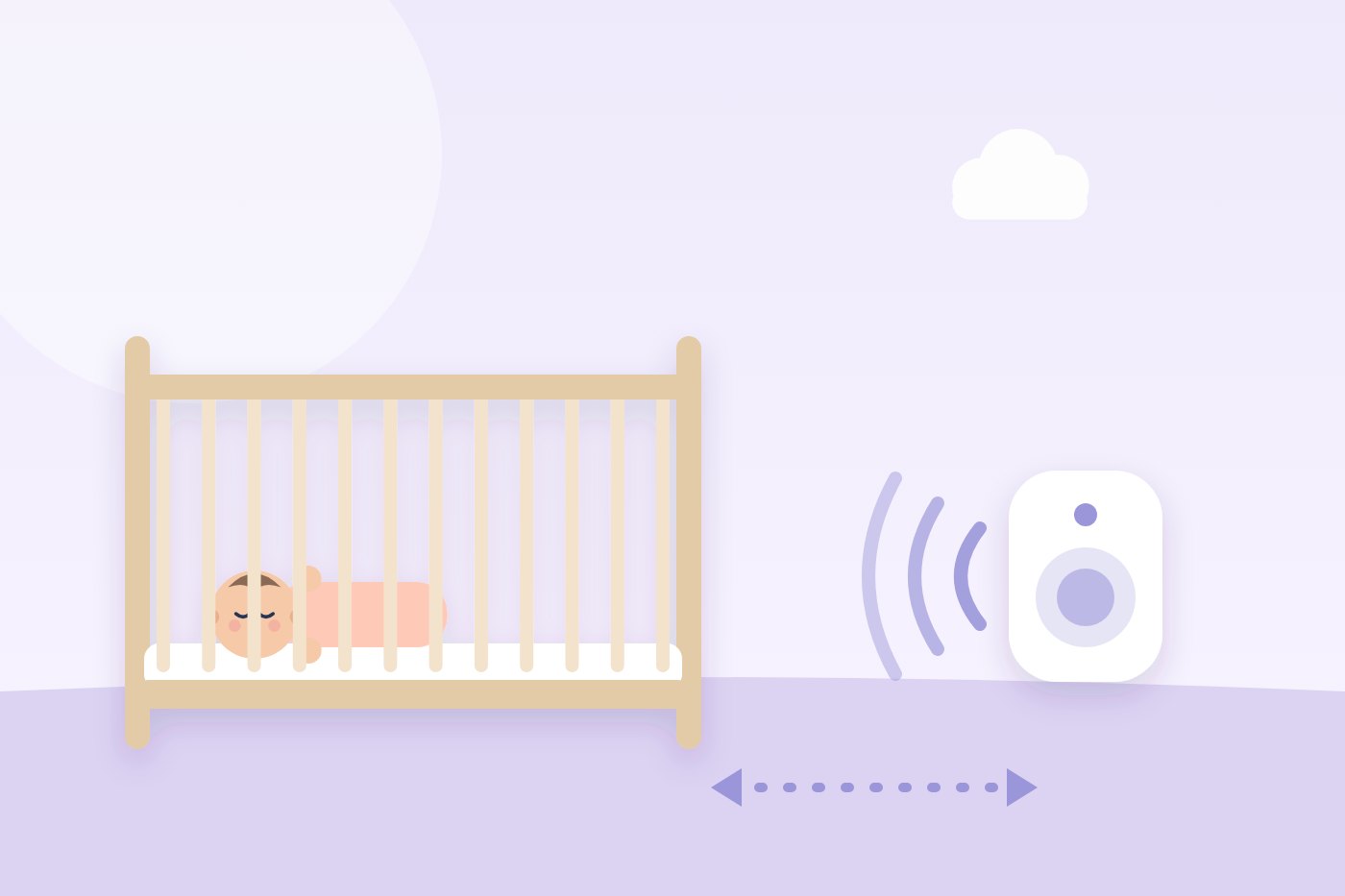
The level that reaches the ear depends on the speaker, setting, distance and room. Twenty percent of one device is not equal to twenty percent of another.
Listening from the approximate position of the baby's head can help you detect clearly excessive volume, but it does not certify safety. A mobile measurement app is also no substitute for reliable acoustic evaluation: microphones and calibration vary.
How to prepare the space
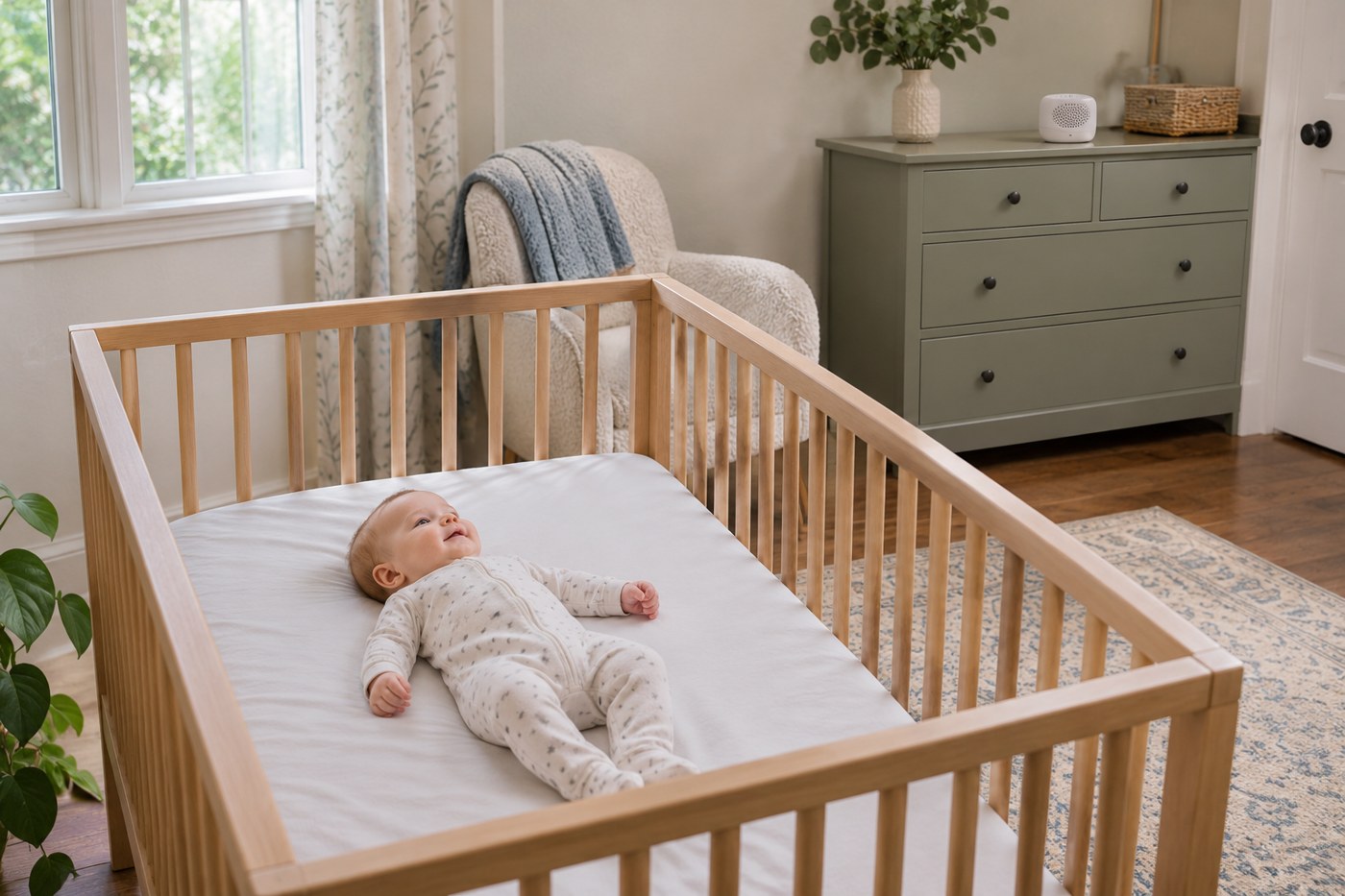
Keep the speaker away from the sleeping area and use a low level. Keep the device, attachments and cables out of reach. Don't put it inside the crib or next to your baby's head, even if it includes a stroller clip.
Don't try to cover all sounds in the house. If you need to turn it up very high to cover a noise source, check that source first or change the sleep location when possible.
A timer can stop the sound continuing simply because someone forgot to switch it off. There is no obligation to use it during every nap or all night.
Test its usefulness with a specific question
For several days, maintain a similar routine and see if an identifiable problem decreases: for example, hallway noises interrupting your baby as they fall asleep.
A particularly good nap does not demonstrate long-term effectiveness. If the baby becomes uncomfortable or there is no clear advantage, you can stop using it. To reduce its presence, gradually lower the setting if that is more comfortable for you, without changing the entire routine at the same time.
Is it worth buying a specific machine?
It can be practical if you want to free the phone or bring a background sound to another house. Compare controls, charging, and ease of safe placement, rather than choosing by maximum power or deep sleep promises.
If you already have a simple solution that works at a low level and with secure placement, you may not need another one. White noise is not a substitute for addressing hunger or pain or safe sleep measures. Seek advice if you have concerns about your baby's hearing or notice that you need louder and louder sounds to get a response.
General information, not medical advice. If you are worried about your baby's sleep, feeding or health, talk to your doctor, midwife or health visitor.